Sigma Launches Tasty New E-Mount Lenses

If there's one complaint that is frequently levelled at Sony's Nex (e-mount) system is the lack of available high quality lenses available for the system. Luckily over the last year that's been changing, with Sony and Zeiss both announcing more high quality lenses for the system. Yesterday Sigma announced some new high quality E-Mount lenses of their own.

Two were new versions of the existing 30mm and 19mm lenses. The new versions are in Sigma's new "Art" range and feature higher quality optics as well as an all new metal design, which it has to be said looks very slick. Full details on the 30mm version here and the 19mm here.


The other new lens announced was a brand new 60mm E-Mount. This is very interesting because there is a dearth of longer prime lenses for the e-mount system, the only one really being Sony's 50mm 1.8 which is ok, but not great.

The Sigma is a f/2.8 so it's not the fastest, but if it's as good optically as the 35mm full frame "Art" series lens they put out least year, this could be a great addition to the format. I for one am excited. Full details on the Sigma 60mm from Sigma's website.

Some Thoughts on the Announcements from Nikon and Fujifilm at CES

If you don't know already, the annual Consumer Electronics Show is happening in Vegas right now and several prominent camera makers have chosen to use the event to launch their latest wares. I won't go into everything that was launched. For that you can pay a visit to DpReview which have been doing a good job on reporting the happenings. Instead, I want to share my thoughts on a few things that piqued my interest. Fuji X100s and Fuji X20

x100s-small.jpg

x100s-small.jpg

I'm a big fan of the X100. While I was disappointed with the X Pro 1 and eventually sold mine, I missed the Fuji look and eventually got an X100, which I absolutely love. One of the things that I really like about the X100 is the fact that you can process its raw files in just about any software, and they always come out pretty damn good. Well, kiss that option goodbye with the newly announced replacement, the Fujifilm X100s because they've put in the same X-Trans sensor from the X-Pro1 in the x100s. I'm sure that most fuji fans think this is a heretical comment to make, and that this is a great leap forward, but I much prefer the X100 files over the post processing hoop jumping that you have to do if you want to get the best from X-Pro1. On the plus side though, perhaps with more cameras using the propitiatory sensor design a few more companies might add support to their raw converters (I'm looking at you Apple) and maybe Adobe might finally accept that they need to improve Lightroom's handling of the X-Trans files. There's lots of other nice features in the update though, including improvements to autofocus, and a very interesting digital split image focus aid. I'm very keen to see that in real life.

The other big news from Fuji is the X20, the successor to the X10, will also get a new tiny cousin of the larger X-Trans sensor found in the bigger cameras. The results should prove interesting. Again, same caveat as the x100s. This means that you can expect far fewer third parties to support the x20s Raw files. Then again, you never know. Fuji are certainly doubling down on their unique sensor technology, so maybe that will spur better support.

Oh, one cool thing about the X20 is that they've now added some information as an overlay in the optical view finder. That was something I found sorely missing when I tried out the X10. It looks like a nice camera but to be honest, I can't see anything competing with the Sony RX100 until someone else decides to up the sensor size.

Nikon 1 Series

Nikon_1_J3_small.jpg

Nikon_1_J3_small.jpg

Nikon announced two new cameras in their mirrorless range. The "J" series now reaches its third incarnation with the J3, and they also introduced a new "S" series, which is a lower end model. The Nikon 1 series has taken a lot of flak from camera enthusiasts, and yet, for the people who use it and take advantage of its unique features, it's giving them great results. The biggest surprise for me regarding the Nikon 1 series was recently reading that it was the biggest selling camera in Japan in the lead up to christmas. I guess Nikon knew what they were doing after all. I have to say, anything I've seen shot with it looks great. The only problem is getting narrow depth of field shots, but then that isn't everything. In fact some photographers would benefit from learning to stop down and give us a sharp image the odd time.

On the subject of the Nikon 1 series, I really home that the next version of the "v" line goes back to the original design. The V1 was lovely, but what the hell were Nikon thinking when they released the V2. It's bloody hideous. If there was an award for the ugliest camera of the year, it would clearly win. It's just that the V1 (and the J series) are beautifully designed, especially the white ones.

A Quick Review of the SLR Magic 35mm f/1.7 Lens on a Sony Nex-7

If there's one issue with the Sony Nex-7 (actually there's more than one issue, but that's another post) it's the lack of good lenses. Hopefully that is changing but there are some unique lenses for the system. One of these is the very inexpensive 35mm f/1.7 from SLR magic. Now, this is not a good lens, but it's not supposed to be. It has very soft edges, and creates that holga or lens baby like effect. It's only around €150 give or take depending on where you get it. I got mine from e-bay direct from slr magic. Waterfall taken whit SLR magic 1.7 on Sony Nex-7

You wouldn't use this as anything other than a special effect lens. It does give an interesting look, that's for sure, but I'm not sure it's something you would use too often. Interestingly enough, the centre is very sharp, which is surprising for this type of lens. The edges have that milk bottle like look. When combined with some heavy photoshop type treatment or something like my film candy presets (shameless plug!) it can create a convincing old analogue camera effect. If you're expecting a cheap 35mm alternative I'm afraid this isn't it, but if you're looking for something for special effects it does the job pretty well.

The lens itself is an odd-looking thing. The body is smaller than a traditional lens so the mount itself is bigger than the actual body. So it looks kind of like a big top hat. The lens itself is an all metal construction and it's quite heavy and surprisingly sturdy. The aperture ring is stopless so there's no way to tell exactly what aperture you're at. It;s not a big deal though as this isn't the lens you would use for precision.

italian bag guy taken with 35mm slr magic lens on nex 7

Image quality is best judged by looking at the images. To be honest, it's not bad for what it is. So, in other words, it's pretty bad, but as I said earlier, that's what you're looking for in a lens like this. I am really surprised at how sharp the centre is though. It's a manual focus lens, so in use it's a bit tricky at first because although the focus ring is smooth it's quite heavy and takes a bit of getting used to. Also the plane of focus is quite narrow and this isn't always picked up by the focus peaking on the nex-7 so you will often have to use the zoom option which can be a little fiddly.

At the end of the day, I'm not sure how practical a lens this is. Sure it's nice for special effects, but how often are you going to use that effect? I guess it depends on your type of photography. Anyway, here's some images taken with this lens on a Nex-7 so you can make your own mind up.

Golden Leaf with 35mm Slr Magic lens on Nex-7

leaf on the grass taken with 35mm slr magic lens on a sony nex-7

Autumn leaves taken with 35mm slr magic lens on a sony nex-7

Dirt Skip taken with 35mm slr magic lens on a sony nex-7

Footprints in Concrete taken with 35mm slr magic lens on a sony nex-7

three guys and a bench taken with 35mm slr magic lens on a sony nex-7

Old Woman and Dog taken with 35mm slr magic lens on a sony nex-7

Leaves taken with 35mm slr magic lens on a sony nex-7

Bubble Boy taken with 35mm slr magic lens on a sony nex-7

Performer with sign taken with 35mm slr magic lens on a sony nex-7


Cool find: Pocket Grey Card from Polaroid

Here's a cool little thing I picked up from Amazon last week. It's a handy little tool to have in your photo bag so I wanted to share it with you. I've been having a devil of a time getting accurate colours from my Nex-7 in the constantly changing Irish daylight, so I wanted to get a grey card so I could accurately measure the proper white balance in a given light set up. I searched around a few local camera shops and all they had were the canvas type fold out ones (that are like a small reflector) which isn't much use for walking around with. Anyway, a quick search on amazon turned up this little number and a short trip through the postal service later and it was in my possession.

It's pretty much as you see it, but it's small and very neat, and comes with a handy lanyard to hang it around your neck. The size is pretty much the same as a credit card. If you're having trouble getting the right white balance or are shooting in mixed lighting I can't recommend something like this enough. Just snap a shot of it in situ in your lighting conditions and then you can use it to white balance off of. Then you can copy and paste the settings to the rest of your images. Anyway, there's lots of different ones available but this one works well and I can heartily recommend it.

If you want to get it from Amazon US here's the link or if you're on this side of the pond here it is on Amazon UK

Forget Megapixels and High ISO - What You Should Really Look For in a Camera

(image from iStock Photo)

The thing that always comes to mind every time I read a review of a new camera, or see the marketing material published by a camera company, is that the things used to quantify how good a camera is are often not the most important qualifiers of quality. In particular, resolution and how high the iso goes are the two factors that are given the most prominence in a lot of camera reviews and ads. I have a real problem with this being the deciding factor though.

For a start, being able to shoot at ISO 12800 or higher is nice but let's face it, most people might use that feature once in a blue moon, and yet every review out there focuses on comparing cameras at these ridiculously high sensitivities, yet few if any take a detailed look at how a camera performs at normal Iso. A far more useful comparison would be how much noise there is at base iso and in the normal range of 100-800 where most people shoot, but when is the last time you saw a review take a detailed look at this? Another important factor in terms of noise is how much noise is in the shadows. In my opinion these two factors are more important than how a camera performs in almost darkness.

Then there is resolution. Despite the push back against the megapixel myth, resolution is often still used as a determining factor. While high resolution cameras do have their purpose, just giving a number of how many pixels a camera has doesn't really tell you much. There are numerous factors that can influence how sharp an image is that are not connected to the sensors actual resolution. For example, the design of the antialiasing filter can have a big impact. Noise reduction can also play a big part as can the de-bayer algorithm. So in my opinion a far better determining factor would be resolving power rather than just a straight megapixel count. To be fair some reviews do take this into account.

Other important factors that are often rarely discussed are dynamic range and colour reproduction. Reviews often do mention dynamic range but frequently just mention the number of stops a camera specifies. In my opinion dynamic range should be given far more prominence as a determining factor in camera choice. Dynamic range is how wide a range of brightness values a camera can capture from the darkest to the brightest point on a scene. The thing that makes the biggest difference in image quality between point and shoots and DSLRs is often not the resolution or the noise handling but the dynamic range. Point and shoot cameras often have a very narrow dynamic range compared to bigger cameras. That's why highlights are clipped and blown out and shadow detail is non existent.

Colour reproduction is another important area that it is very hard to find information on. What do I mean by this? How does a camera render a scene? How are greens? How are reds and blues? Are colours vibrant or flat? How does it perform in mixed lighting? How does colour hold up to being manipulated? How do flesh tones look? All these factors play an important role in how an image looks, and yet they are often never discussed. Fuji cameras for example produce vibrant punchy colours yet there is now way to quantify this as a number. My Sony for example has colours that appear off and often flesh tones have a yellowish tint, yet this isn't reported in any review I've ever read.

The funny thing about this is that in the world of cinematography these things are given prominence and dynamic range and colour reproduction are often considered the two most important factors in the choice of cameras, particularly as the sector transitions from film to digital.

At the end of the day marketing people like numbers and that's why things are the way they are, but I hope this post has provided some food for thought. You may not agree with me, you may have your own ideas as to what is most important, but in a sea of specs I think people should always be aware that they should be looking for actual results rather than numbers on a page or lines on a chart.

What A Week

Wow. That's all I can say. Of all my years following the camera technology industry (as well as taking photos of course) I don't think I ever remember such a slew of interesting announcements in such a short space of time. And, in typical fashion I was utterly swamped with work the last week so I'm completely behind in what's been announced so I'm finally getting to share my thoughts now. So, in no particular order here are some random observations about some of the things that have come out over the last week leading up to Photokina 2012. I'm not going to talk about everything (because there's just so much stuff) but just what I found interesting and worth discussing. (I've had a pretty long week too, so please forgive any bad grammar or typos, or half finished thoughts!)

Sony

Sony are on fire at the moment. Hot on the heels of the widely popular RX100 they announced the breakthrough RX1. I'm not really sure what to make of this camera yet. From an engineering standpoint it's very impressive. Do people want a full frame camera with a fixed 35mm lens though? I guess time will tell. It does remind me of the good old days of Sony though. You know, back when the company used to make products that were engineering marvels and you wondered how on earth they did it. I've always been a fan of Sony and most of my audio and video purchases have always been Sony, but lately I, like many others, have felt that the company has lost their way. Instead of precision craftsmanship they were releasing plastic crap. Not everything of course, but a lot. The RX100 is old school Sony. It's precision and it's beautiful and yet pushing the envelope of miniaturisation all in one go. It's not really a camera that interests me personally but I can appreciate the work that went into making it.

Other sony announcements of note were the A99. Sony's full frame SLT. Another full frame in a sea of full frame releases this year (more on that in a minute). Of note is the interesting development that Sony has finally ditched its (well, minolta's) proprietary flash hot shoe and opted for a standard one instead. There's also some interesting video additions on this camera too, and Sony seem to be taking video more seriously.

I'm more interested in the NEX related announcements. In particular, they've finally announced a fast 35mm lens, which the system badly lacked. Hopefully it will be a bit better than their other NEX lenses, which, with the exception of the impossible to get Zeiss 24mm (of which I have no experience) have been less than stellar. Still, it's good to see Sony maturing the system with the addition of some other lenses too including another much needed addition, an ultra wide.

Nikon

Nikon's big announcement was the much rumoured D600. The third of the high profile full frame releases (after the RX100 and the A99) it's the one I'm most interested in personally. Offering a mid ground in terms of megapixels between the old D700 and the D800 this was the camera many people wanted. What's interesting though is they put it in a smaller and lighter body, so it's basically a full frame D7000. It's a very appealing camera at an appealing price point, or at least it would be if we weren't being fleeced on the price here in Ireland. The D600 retails (suggested retail) for $1999 in the US and yet is somehow being listed for €2299. Given the difference in currencies that makes it a whopping $1000 more expensive in europe. I know there's differences in taxes etc but there is no justification for such a price difference. You could actually get a return flight to New York for the difference in price.

Panasonic and Olympus

Panasonic just today announced the GH3, the long awaited successor to the GH2. I have had the GH2 for some time and I use the hacked version for shooting video. It's an amazing little camera. The video quality, especially with the hack is second to none. It's pin sharp and limited only by the bit depth of the sensor. The work done by the guy who hacked it is remarkable and has earned him and the hacked GH2 numerous accolades. Amazingly panasonic have taken notice and have upgraded the GH series to include many of the features from the hack including a very impressive new 80mbs i-frame compression codec. If you've never shot video this isn't of much interest to you, but if you do this is a really big deal. As well as that, the new camera is dust and splash proof, and the new design is gorgeous. Kudos to Panasonic for taking bold steps.

If you haven't seen it already check out the amazing video shot by Philip Bloom using a pre production GH3.

Panasonic GH3 launch film: Genesis from Philip Bloom on Vimeo.

Olympus announced a new version of their PEN camera, which is not of that much interest to me, but they did release one clever new feature which was a lens cap with a fixed focus lens built in, so you don't have to miss a shot while you search for a lens. It's kind of a gimmick, but it's certainly thinking outside the box. They also announced a very nice looking macro lens for the micro four thirds system.

Over all, the micro four thirds system is becoming quite mature with a wide range of professional and consumer quality lenses available. I've dipped my toe in the NEX world and the Fuji ecosystem, but I keep coming back to the feeling that micro 43 is where the momentum is in the mirror less world. It's looking like a really strong platform, especially if you are doing both photo and video.

Canon

Canon announced the Eos-6D today. I have to say, I'm finding it hard to get excited about. It seems to me to be pretty much the 5d Mark II with a few tweaks, selling at the price that the 5D Mark II has been selling at since the 5D Mark III was announced. It seems to have the same antiquated autofocus system from the 5DII which was the same as the 5D1. I am perhaps being a little unfair. It does have basic wifi functionality and built in GPS. I'm sure it's a fine camera in its own right but nothing that exciting, and just a minor iteration of the 5DII which is currently selling for the same price.

[hr]

There is more still to come from Photokina, and I'll post some more thoughts later in the week.

Essential Photo Gear To Consider before you buy a new Camera

If you're considering buying a new camera though, consider taking a look at the rest of your equipment set up first. This isn't going to be one of those patronising posts where I make assumptions about your skill level and tell you that you should learn photography properly and forget about buying a new camera (seriously, why do so many photography bloggers insult their readers by assuming everyone is just a gear head with no skills?). By all means get a new camera if you feel you're ready but most modern cameras, even entry level ones are very capable and a well rounded set of lenses and accessories can be a better investment, especially if you're missing some of the basics. So what then do I consider is essential for your bag? Lets look at the basics first and then look at some additional things that you might want to consider.

A Good Tripod

Dublin at night

Shot on a Tripod

I've put this first, because a surprising number of photographers don't have a decent tripod. I know that there are quite a few people who don't like shooting on a tripod or feel it interferes with their art, but you really should have a good tripod. If you want to take images that are tack sharp, or if you want to blur car lights for example, or shoot at night properly you need a tripod. Even if you think you don't, or that you can just raise the ISO and shoot hand held, once you've seen the possibilities of shooting with a tripod, and see the advantages, you'll understand why it's so important.

A good tripod can be an investment, but the difference between a good one and a mediocre one is huge. If nothing else get a descent ball head with standard legs. A ball head is one of those things you'll wonder how you did without once you get one. It makes a huge difference and makes shooting with a tripod much more pleasurable. I have a manfrotto hydrostatic ball head and it's pretty good.

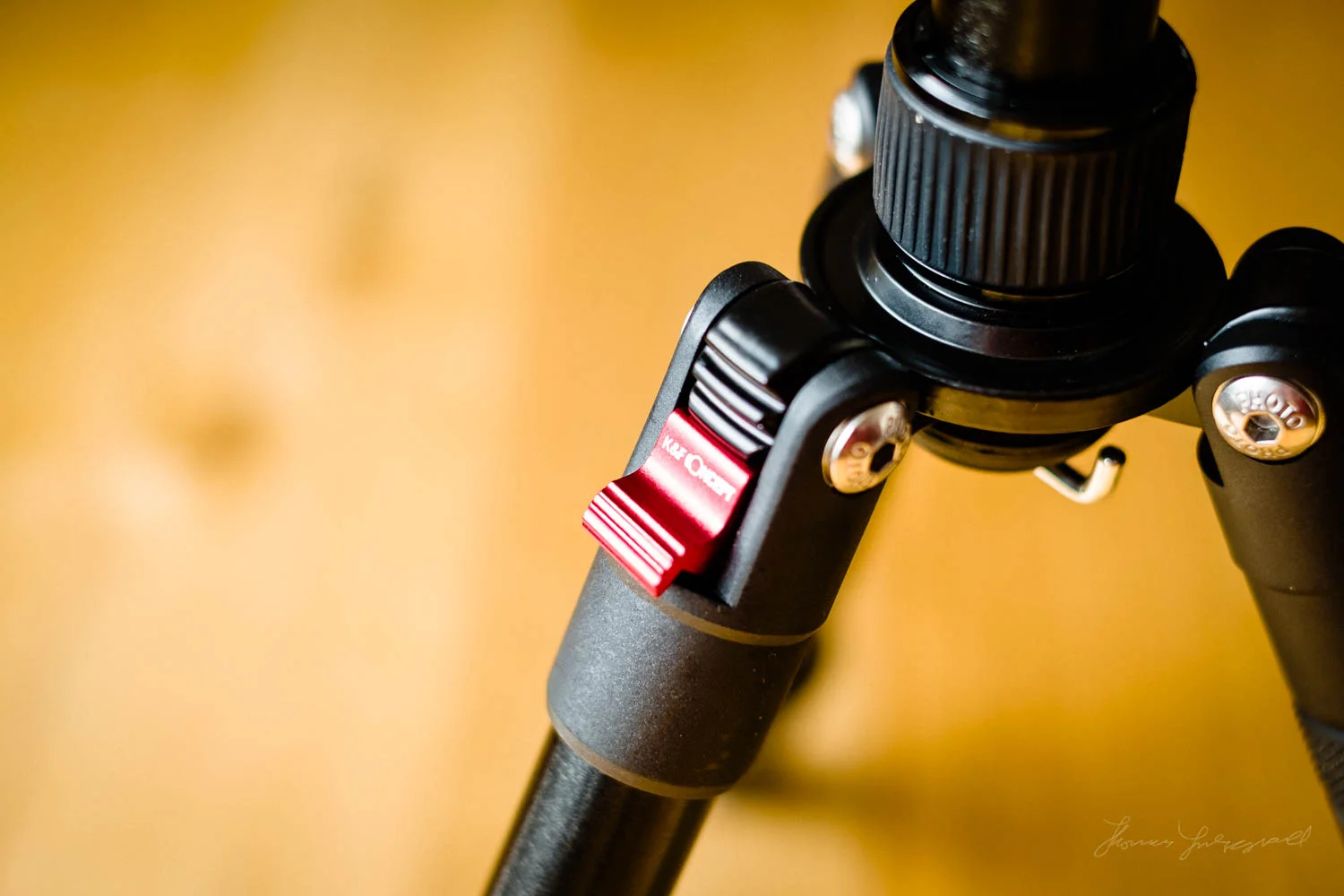
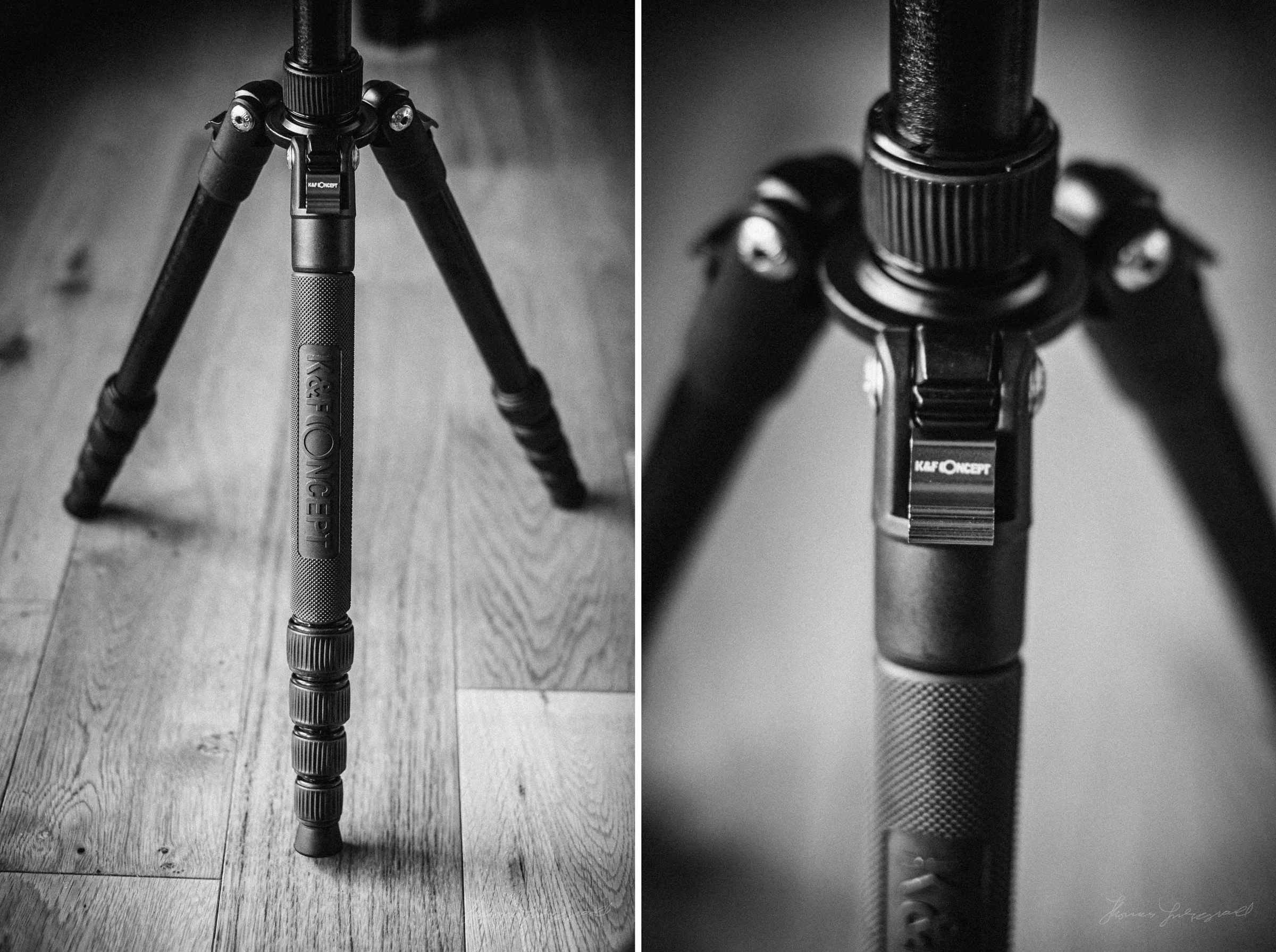
In terms of legs, you need something sturdy as a start, and optionally something light. The other thing to look for is the locking mechanism. My first set of tripod legs, which was a cheap pair of manfrotto aluminium legs, had a thumbscrew type locking mechanism, and now they're very difficult to lock properly because the mechanism has worn. It's not that old either. You have to twist the screw really hard now to get it to lock, and it's a real pain. The more expensive tripods have either twist and lock mechanisms or a lever type lock. Either works pretty well. Spending a bit of money now on a good set of tripod legs and a good tripod head will be a worth while investment because a good one should last for years.

Lenses

Here are a few lenses for your kit that you should consider if you don't already have them.

Telephoto

The first is a good telephoto. If you can afford a pro level one then by all means, but a lot of the semi-pro telephoto lenses are pretty good. On the Nikon side the 70-300mm is apparently a really good lens (I have a Sigma 70-200 2.8 which you can see my review of here) and on the canon side the 70-200 f4 is relatively inexpensive, but very good.

Pro Level Standard Zoom

The second thing you should consider is getting a pro level standard zoom. Why? Well, every now and then you will come across a situation where you need to take a photo for someone that absolutely has to be the best quality possible. If you have at least one pro level lens you'll always have the capability at least. Yo don't need the highest end lens either, but something in the high end will serve you incredibly well. And if you have just one pro level lens, having it be a standard zoom will probably be the most versatile. You can expand out your range in the future but this is something I would consider essential if you want to expand your photography capabilities. They can be expensive, but what you get from a good pro level lens will be worth more in the long run than spending the same amount on a camera body.

For full frame: On Canon, either the 24-105 or the 24-70. On Nikon, either the 24-120 F4 (not the previous generation) or the 24-70 if you can afford it. If you are on a cropped sensor camera consider either manufacturer's 17-55 f2.8.

Again, you might think this is excessive if you are beginning photography but any of these lenses will allow you to take images with the technical quality to satisfy the most demanding client (provided your technique is up to scratch of course!)

Ultra Wide

DSC0213

Shot with a 10-22mm Lens

This is another one of those lenses that people don't think they need until they get one and then realise what they've been missing out on. If you want to take landscapes or cityscapes, having an ultra wide will make a huge difference. Luckily there are a few good ones to choose from in various price points. For full frame, Canon has the excellent 17-40F4L and 16-35L (which is quite expensive). Nikon has the expensive but (apparently) amazing 14-24 f/2.8 and the very versatile and less expensive 16-35f4 VR. Again, both companies have cropped sensor versions.

Nifty 50

DSC 0334

Shot on a Nikon D700 with 50mm 1.8

You should get a 50mm if you don't already have one (or a 35mm on a cropped sensor) The reason is two fold. These standard lenses are pretty inexpensive and the quality to cost ratio is enormous. The reason to have a standard lens (as they're called) is because it's the focal length that most closely matches what the human eye sees. Shooting with a 50mm prime is quite liberating, and it really teaches you to think when composing shots. Some people shoot with nothing but a 50, (which I don't agree with), but for a lot of subjects, particularly street photography it's a prefect lens, so you really should have one in your bag. A 50mm 1.8 will set you back around €200 so it's a pretty cheap investment relatively speaking for the payoff.

Flash

IMG 0128

Shot using an off camera Canon flash

I hear the phrase "I don't like the look of flash, I prefer to shoot in natural light" a lot from photographers of various skill levels. I don't mean to sound rude or patronising, but if you believe that, it's because you don't know how to shoot properly with flash. Why? The thing with flash is if you use it right it won't look like flash. It will look like natural light. The advantage is it gives you complete control over that light. Once you do it will change your photography forever. Here's the thing, if you are in doubt, do me a favour. Go look at the work of Joe McNally. Seriously, do it now, I'll wait. Ok, you're back! See what I mean?

Anyway, you should have the capability to use flash. And to use it properly you should be able to use your flash off your camera. This is a huge subject, and I won't go into it in detail here but I would recommend the mid range or top end flash from both Canon and Nikon although I'd steer clear of the basic models as they don't have all the features you need to shoot off camera. If you want to learn more check out Joe McNally's classes over at Kelby Training (seriously, you won't regret it) or check out Strobist.com.

Optional Extras

Here are a few things that I wouldn't consider essential, but are pretty handy to have

Travel Lens

I'll call this a travel lens, but what I really ran is a "super zoom" to use the popular term. These are really handy to have because while they might not be perfect in terms of optical quality, the advantage of not having to change lens can be really useful in certain circumstances. It also makes it really handy if you need to travel light.

I have the excellent Nikon 28-300 on my D700. It's a great lens. It's pretty sharp all round, and while it's not the fastest glass, the flexibility is worth it. I always use this when travelling, and I've gotten some of my best images with it.

Before I had the 28-300, I had it's cropped sensor little brother the 18-200, which has now been superseded by the 18-300. this was also a great lens, although in my opinion, not as optically good as the 28-300.

I'm not as familiar with the Canon equivalent of the 28-300 but it's much more expensive than the Nikon version. It's €3000 here in Ireland compared to under €1000 for the nikon version. It's also a pretty big lens.

Macro

The other lens to consider is getting a good macro. I have a macro lens on both my Canon and Nikon systems (I have both systems - long story) and I love shooting macro. My Nikon lens is an old one that I got second hand, and it's before the VR version came out. It's a great lens but it's long gone from production, so there's not much point in me recommending that!

My Canon one is the previous generation 105mm Macro and it's a superb lens. It's probably the sharpest lens I have on any body.

Conclusion

So that's about it. That's my list of what I think are essentials for any camera bag. I'm sorry for only focussing on Nikon and Canon, but they're the brands I'm familiar with. If you have you're own suggestions please leave them in the comments below, but please remember this isn't about the philosophy of gear vs art so please keep it relevant.

The Advantage of Nikon1's 2.7X Crop Factor For Nature Photographers

I think Nikon's "1" Mirrorless system gets something of a bad rap from mirrorless camera fans. People dismissed it because of its smaller sensor compared to Micro 4:3 and APS-C sized sensor in Sony and Fuji's cameras. But most of the people complaining about it have never actually used one, or even taken the time to give it a good look. And, while I haven't used one personally, I did get a chance to play around with some raw files from a V1 and I have to say, I was quite impressed. They looked very like files from my D700 in terms of the overall tonality. They have that nice Nikon look to them. Anyway, with the release of the J2 today, I was doing some reading and I came across this very interesting video which made me think of how useful that 2.7X crop is for nature photographers. While it's pretty much just a promotional ad for Nikon it does show some wonderful shots, and also points out the advantage of getting 2.7 times closer to your subject when using Nikon Lenses with the adaptor.

On the subject of Nikon's 1 system, given that Nikon traditionally uses sensors designed by Sony, I'm willing to bet that the sensor from the incredibly received Sony RX100, which just happens to be the same size as Nikon's 1 "CX" format, turns up in the next iteration of the V1 or the much rumoured high end Nikon 1 system ?

By the way, if you like this blog, don’t forget to Subscribe to the RSS Feed, or check out my Google Plus and Facebook Pages

Some Fun With The Sigma 30mm E-Mount

I have been in the process of writing a review of the Sigma 30mm E-mount lens for a while now, and I'm still gathering shots to go with the review. In the mean time, I thought I'd share a few that I was having a bit of fun with in Aperture yesterday. The lens is actually not a bad little lens, especially considering the price. It's not perfect either mind you. It's sharp, thats for sure, but there's some fall off at the edges, and there's a lot of colour fringing, especially when used wide open. Also, f/2.8 just isn't that great for getting shallow depth of field on a cropped sensor camera with the 30mm focal length. If my math is right (and please correct me if I'm wrong) f/2.8 becomes f/4.2 in 35mm terms, so it's not that great. But then aagain, it's not an expensive lens, and within it's limitations it's actually quite good. I'll have a more in-depth analysis in my long awaited (by me anyway!) review. But for now here's a few images taken with it. Incidentally, I had been processing most of my photos from the Nex-7 with Lightroom, but there's been some things about Lightroom 4 that have been driving me mad (more on that later!) so I decided to give them a go in Aperture. Now, I'm a long time Aperture user, and the reason I had been using Lightroom for the Nex-7 was for the noise reduction and the auto lens correction, so it's not like I was trying it for the first time. Anyway, I was pleasantly surprised. In un-scientific tests, at ISO 100, Aperture seems to do a better job. Images appear marginally sharper, and noise is actually better controlled. The advantage quickly goes away at higher ISO's but anyway, it's interesting. Either way, it doesn't really matter in the grand scheme of things, but I do like Aperture ability to stack multiple versions of a tool, and I was able to use my "Film Candy' series and some of my other presets that I have been building in Aperture for a while. I know some people don't like any kind of processing done to Images, but as someone who works in the tv and film industry, where adding a "look" is pretty much part of my day job, I  can't really resist!!! Besides, it's all just a bit of fun. So, let's get to some pictures!

By the way, I've included slightly larger versions, so just click on them to see them larger (if you have a big screen) - but don't miss out on the captions !!!

By The Canal

I had to take this shot as It was similar to one I had taken with the X-Pro1. Have to say, apart from the depth of field, I can't see much of a difference.

Lilly Pads in The Rain

Lilly Pads in The rain. I luckily arrived under a large tree just as it began to pour.

Woman with red umbrella

Nice Umbrella!

Lock

Amazing to think that this little tiny padlock is keeping that huge barge moored!

Patrick Kavanagh's hat

Patrick Kavanagh's hat

Bold colours and grungy textures, oh my !

Obligatory Fallen Leaf Shot!

Door 102

I love the number above the door. I think I have a font that does that!

Another Door

I like taking pictures of doors! You got a problem with that? (doing best Joe Pesci impression)

horse and cart

Oops, looks like the horse's indicator is out again!

So that's where he went !

Georgian Buildings

It has to be said, there are some lovely buildings around the Georgian quarter of Dublin. Unfortunately, having worked in several of them, they're not that nice inside.

"I could swear that someone's following me"

Ah, my favourite spot in the park.

Well, that's about it for now. I should have the full review up soon. I'll have the complete set from this session up on Google Plus if you want to have a look. Oh, and please subscribe to my RSS feed if you use RSS !